
Best Home Insulation Upgrades for Maximum Energy Savings (2026)
Discover the best home insulation upgrades in 2026 that cut heating and cooling costs, improve comfort, and deliver the fastest ROI across different US climate zones.
- home insulation
- attic insulation
- wall insulation
- crawl space insulation
- spray foam insulation
- fiberglass insulation
- cellulose insulation
- energy efficiency
- home energy savings
- insulation upgrades
- weatherization
- HVAC efficiency
- heating costs
- cooling costs
- home improvement
- ROI insulation
Best Home Insulation Upgrades for Maximum Energy Savings (2026)
26.06.2026
Introduction
Most homeowners underestimate how much money leaks out of their home every month. Not through appliances or lighting—but through the building itself. Walls, attics, crawl spaces, and tiny air gaps quietly waste energy 24/7.
In 2026, with higher electricity prices and rising heating costs across the US, insulation has become one of the most financially effective home upgrades available. It is not flashy. It does not involve apps or smart devices. But it directly reduces energy consumption every single day without any behavior change.
The core idea is simple: if your home keeps heat in during winter and out during summer, your heating and cooling system works less. That means lower bills, less wear on HVAC equipment, and better comfort.
But not all insulation upgrades are equal. Some deliver fast payback, others are expensive and slow to recover. This guide breaks down what actually works in real US homes in 2026.
How Home Insulation Works in Real Life
Insulation slows heat transfer between indoor and outdoor environments. It does not generate heat or cooling—it preserves what your HVAC system already produced.
There are three main heat transfer mechanisms:
- Conduction – heat moving through materials like wood, drywall, or brick
- Convection – air movement carrying heat in and out of gaps
- Radiation – heat energy from sun exposure and warm surfaces
Good insulation reduces all three, but no single material eliminates them completely.
The effectiveness of insulation is measured by R-value. Higher R-value means better resistance to heat flow. However, real-world performance also depends on installation quality and air leakage control.
Why Insulation Is the First Energy Upgrade You Should Consider
Before investing in solar panels, batteries, or even HVAC upgrades, insulation should be the foundation.
Why?
Because it reduces energy demand at the source.
If your home loses 30% of heat through the attic, installing a more efficient furnace still wastes that energy. You are optimizing the wrong layer of the system.
Typical results of proper insulation upgrades:
- 10–30% reduction in heating/cooling costs
- More stable indoor temperatures
- Reduced HVAC cycling (longer system lifespan)
- Better humidity control
In many cases, insulation alone solves comfort problems homeowners wrongly attribute to “bad heating systems.”
##. Attic Insulation (Highest Impact Area in Most Homes)
The attic is the single biggest energy loss zone in most US homes.
Since warm air rises, poorly insulated attics allow heat to escape quickly during winter. In summer, roof heat radiates downward into living spaces.
Common upgrades:
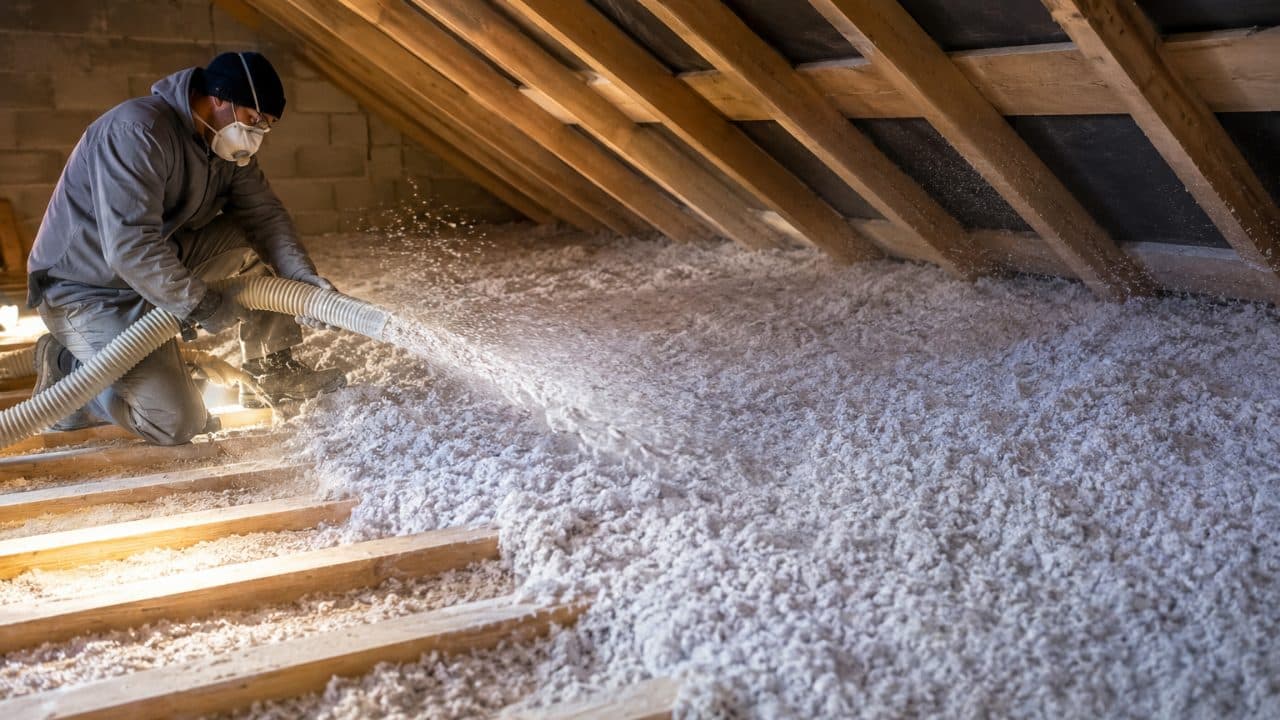
- Blown-in cellulose top-up
- Fiberglass batt replacement
- Spray foam roof deck sealing
Real-world impact:
Homeowners in colder states like Minnesota or Michigan often see immediate improvements in:
- Heating bills
- Upstairs room comfort
- Ice dam reduction on roofs
ROI:
Attic insulation typically pays back in 2–5 years, making it one of the strongest home upgrades available.
Wall Insulation (Hidden but Important)
Wall insulation is less visible but still critical, especially in older homes built before modern energy codes.
Many homes built before the 1980s have:
- Empty wall cavities
- Incomplete insulation
- Settled or degraded material
Upgrade methods:
- Dense-pack cellulose injection
- Drilling and filling cavities
- Full drywall replacement (renovation-level work)
Wall insulation improves:
- Draft reduction
- Winter comfort
- Cooling efficiency in summer
However, ROI is slower because installation costs are higher.
Crawl Space & Basement Insulation
Crawl spaces and basements are often ignored, but they strongly affect comfort.
Problems they cause:
- Cold floors in winter
- Moisture buildup
- Heat loss through foundation walls
Solutions:
- Rigid foam board insulation
- Spray foam sealing
- Vapor barrier installation
In humid states like Florida or coastal regions, moisture control is as important as temperature control.
Spray Foam vs Fiberglass vs Cellulose
Each insulation type has strengths and weaknesses.
Spray Foam
- Highest air sealing capability
- Very high R-value per inch
- Expensive
- Long-lasting
Best for: critical air leak areas, roof decks, basements
Fiberglass
- Most affordable
- Widely available
- Lower air sealing performance
Best for: budget attic upgrades
Cellulose
- Eco-friendly
- Good air sealing when dense-packed
- Settles slightly over time
Best for: retrofit wall insulation and attic topping
No single material is best everywhere. Most high-performance homes use a combination.
Air Sealing: The Most Ignored Upgrade
Even high R-value insulation performs poorly if air leaks exist.
Air leaks commonly occur in:
- Window frames
- Electrical outlets
- Attic hatches
- Plumbing penetrations
Air sealing often delivers faster ROI than adding insulation thickness.
In energy audits, air leakage can account for up to 25–40% of energy loss in older homes.
Climate Zones in the US and Why They Matter
Insulation ROI depends heavily on geography.
Cold climates (Minnesota, Wisconsin, Maine)
- Heating dominates energy use
- Insulation ROI is extremely high
Hot climates (Texas, Arizona, Florida)
- Cooling dominates energy use
- Attic insulation is critical
Mild climates (California coastal, Pacific Northwest)
- ROI is lower but still meaningful
- Focus on air sealing and comfort improvements
Climate determines whether insulation pays back in 2 years or 8 years.
Real Cost vs Energy Savings (2026 Data)
Average installation costs:
- Attic insulation: $1,500 – $4,500
- Wall insulation: $3,000 – $10,000+
- Crawl space insulation: $2,000 – $6,000
- Air sealing: $500 – $2,000
Typical savings:
- 10–30% reduction in HVAC energy usage
- $200 – $900 annual savings depending on home size and climate
ROI range:
- Attic: 2–5 years
- Crawl space: 3–7 years
- Walls: 5–12 years
- Air sealing: 1–3 years
Common Mistakes Homeowners Make
Most inefficiency comes from poor decisions:
- Adding insulation without air sealing
- Ignoring attic ventilation balance
- Using wrong materials for climate zone
- Over-insulating walls but ignoring crawl spaces
- Relying only on HVAC upgrades instead of building envelope
Insulation must be treated as a system, not a patch.
Best Upgrade Combinations for Maximum ROI
Highest-performing combinations:
- Attic insulation + air sealing
- Crawl space sealing + basement insulation
- Wall insulation + HVAC optimization
The synergy between upgrades matters more than individual improvements.
When Insulation Is NOT Enough
Insulation cannot fix:
- Oversized or outdated HVAC systems
- Poor ductwork design
- Extremely inefficient windows
- Excessive energy usage behavior
In these cases, insulation reduces waste but does not solve root inefficiency.
Real Household Case Scenarios
Case 1: Cold Midwest home (Chicago suburb)
- Old attic insulation upgraded
- Air sealing added
Result:
- 28% reduction in heating bill
- Noticeably warmer upstairs bedrooms
Case 2: Hot Texas home (Dallas)
- Attic insulation upgraded
- Crawl space sealed
Result:
- Lower AC runtime
- Reduced peak summer bills
Case 3: Older Northeast home (Boston)
- Wall insulation added
- Attic upgraded
Result:
- Major comfort improvement
- 20–25% energy savings
Final Verdict
Insulation is one of the most underrated but highest-impact home investments in 2026.
It does not promise dramatic overnight transformation. Instead, it provides consistent, long-term savings and comfort improvements that compound over time.
If your goal is reducing energy bills with strong ROI, insulation should almost always be the first step in any home efficiency plan.
FAQs
1. What insulation upgrade gives the highest ROI?
Attic insulation combined with air sealing.
2. How long does insulation last?
20–40 years depending on material and installation quality.
3. Does insulation really lower energy bills?
Yes, typically by 10–30%.
4. Is spray foam worth the cost?
Yes in extreme climates or air-leak-prone homes.
5. What is the cheapest upgrade?
Air sealing and attic top-ups.
6. Do older homes need insulation upgrades?
Almost always, yes.
7. Can insulation improve comfort immediately?
Yes, often within days after installation.
8. Should I upgrade insulation before HVAC?
Yes, in most cases it is more cost-effective.
Conclusion
Home insulation is not a cosmetic upgrade—it is one of the most fundamental improvements you can make to how your home performs.
In 2026, with rising energy costs across the US, the homes that waste the least energy are not necessarily the ones with the most advanced technology, but the ones with the strongest building envelope.
Insulation works quietly in the background every day. It reduces heating demand in winter, lowers cooling load in summer, and stabilizes indoor comfort without any user intervention. Unlike HVAC systems or smart devices, it does not require maintenance cycles, behavior changes, or ongoing adjustments.
The key takeaway is simple: insulation is not about comfort alone—it is about reducing unnecessary energy consumption at the source.
If your goal is long-term savings, insulation upgrades should come before almost any other energy investment. Solar panels, heat pumps, and batteries all perform better in a well-insulated home because the baseline energy demand is already lower.
In most cases, homeowners do not realize how much energy they are losing until after the upgrade is done. That is when the difference becomes obvious—not just on the bill, but in daily comfort.
The smartest approach is not to treat insulation as a single project, but as the foundation of a complete home energy strategy.
Related reading
 Commercial Heating Costs Explained: How to Calculate HVAC Energy Use for Buildings (2026)
Learn how commercial heating costs are calculated for offices and business buildings. Understand HVAC energy usage, efficiency factors, and how to estimate heating expenses using real building data in 2026.
 Air Conditioning in the United States: The Complete Homeowner Guide (2026)
Complete 2026 guide to air conditioning in the United States. Learn how AC systems work, how to size them correctly, installation basics, costs, SEER ratings, and how to avoid expensive sizing mistakes.
 Heat Pump vs. Gas Furnace: Which Actually Costs Less in 2026?
Heat Pump vs Gas Furnace in the United States: 2026 Cost and Efficiency Comparison