
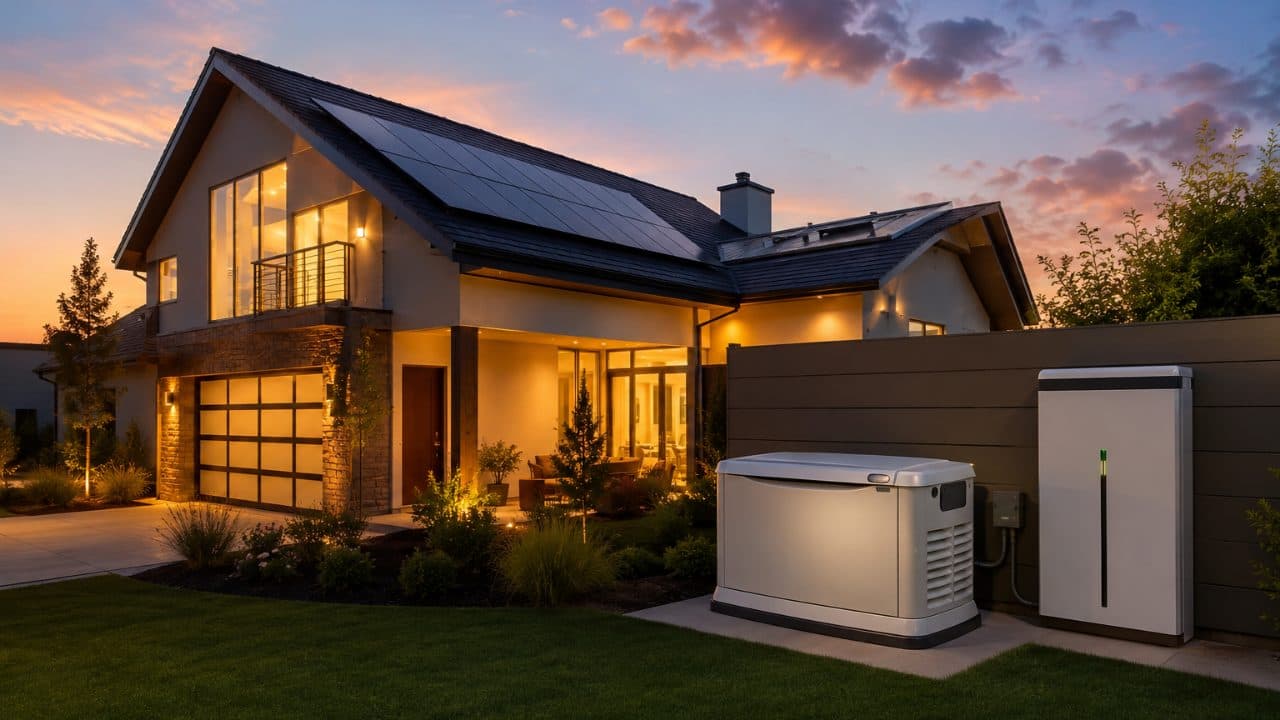
Home Energy Backup Systems in the USA: Battery Storage vs. Standby Generators (2026)
Compare home energy backup systems in the USA in 2026. Learn the real differences between battery storage and standby generators, including cost, performance, and proper sizing for reliable emergency power.
- home energy backup
- emergency power
- whole home battery
- standby generator
- critical loads
- grid reliability
- lithium-ion storage
- propane generator
- energy resilience
- power outage solutions
Home Energy Backup Systems in the USA: Battery Storage vs. Standby Generators (2026)
Learn how residential emergency power backup systems are evaluated in the United States. Understand critical load sizing, fuel types, battery technologies, and how to select the right resilience strategy in 2026.
25.06.2026
Introduction
Home energy backup systems have transitioned from niche rural investments to essential infrastructure for suburban and urban households across the United States.
Unlike standard commercial setups, residential emergency power solutions must accommodate:
- Strict local noise ordinances
- Limited physical installation space
- Variable electrical service capacities (100A vs 200A panels)
- High surge loads from HVAC systems
- Immediate transfer requirements (ATS systems)
In 2026, increasing grid instability and extreme weather events have made proper system sizing more important than ever.
Types of Emergency Power Systems
Residential backup systems generally fall into three categories:
Whole-Home Standby Generators
- Natural gas or propane powered
- Automatic transfer switch (ATS)
- High surge capacity
- Long runtime as long as fuel is available
Stationary Battery Storage (ESS)
- Lithium-ion or LFP chemistry
- Silent operation
- Instant response time
- Can integrate with solar systems
Portable Generators
- Gasoline powered
- Manual setup required
- Lowest cost option
- Limited power output and usability
Key Factors That Dictate System Selection
- Expected outage duration (hours vs multi-day events)
- Fuel availability (gas line vs propane vs gasoline)
- Noise and zoning restrictions
- Maintenance tolerance
- Whether HVAC backup is required
- Solar integration potential
Critical Load Sizing Methodology
Household electrical loads are divided into:
Essential Loads
- Refrigerator / freezer
- Internet and communication devices
- Basic lighting circuits
- Medical equipment
- Sump pump (if present)
High Surge Loads
- Central air conditioners
- Heat pumps
- Water heaters
Non-Essential Loads
- Ovens and stoves
- Laundry appliances
- Entertainment systems
Real-World Example: Home Backup Sizing (2026)
Example Home:
- 1500–2000 sq ft residential home
- Gas heating, electric cooling
- Standard US suburban electrical panel (200A)
Estimated Load Breakdown:
- Refrigerator: ~150W (600W startup surge)
- Lighting + outlets: ~300–500W
- Internet + devices: ~100W
- Sump pump: ~800W (2000W surge)
- Central AC (optional): 3000–4000W (6000–9000W surge)
System sizing outcome:
- Critical-load generator: ~5–8 kW
- Battery system: ~10–15 kWh usable capacity
- With HVAC included: 10–20 kW generator OR hybrid battery + inverter system
Most sizing mistakes happen when surge loads (especially HVAC compressors) are ignored.
Energy Sources: Fossil Fuels vs. Stored Power
Natural Gas / Propane Generators
- Low cost per kW output
- Unlimited runtime (fuel dependent)
- High noise and emissions
- Mechanical maintenance required
Battery Storage (LFP / Lithium-Ion)
- High upfront cost
- Silent operation
- Instant switching
- Can recharge via solar
- Limited energy capacity per cycle
Common Mistakes in Emergency Power Sizing
1. Sizing based only on square footage
Does not reflect actual electrical demand.
2. Ignoring compressor startup loads
HVAC systems can require 2–4× running wattage at startup.
3. Overestimating battery usable capacity
Most systems cannot safely use 100% of rated capacity.
4. Assuming full-home backup is always necessary
Most homes only need critical-load backup systems.
Conclusion
US home energy backup decisions depend heavily on grid stability, household electrical demand, and installation constraints.
Proper system design ensures:
- Reliable emergency operation
- Avoidance of oversizing costs
- Better long-term resilience
In most cases:
- Batteries are best for quiet, short-duration backup
- Generators are best for long outages
- Hybrid systems offer the most balanced solution in 2026
Related reading
 Will Electric Cars Still Be Worth It in 2027? Cost Breakdown vs Gasoline
A full cost breakdown of electric cars vs gasoline in 2027. Compare charging costs, fuel prices, maintenance, depreciation, and total ownership costs to see if EVs are still worth it.
 EV Ownership in 2026: Maintenance, Costs, Charging & Real Economics (USA Guide)
A detailed 2026 guide to EV ownership in the USA covering maintenance, charging costs, electricity pricing, battery degradation, and real-world operating economics compared to gasoline vehicles.
 Best Home Insulation Upgrades for Maximum Energy Savings (2026)
Discover the best home insulation upgrades in 2026 that cut heating and cooling costs, improve comfort, and deliver the fastest ROI across different US climate zones.